






LEATHER THAT IS STICKY OR TACKY AFTER A RENOVATION
Why can a renovated material become sticky or tacky?
Typical case: after recolouring
Painting requires a surface that is completely free of grease and silicones. Thorough preparation is essential: very light sanding, dusting, then degreasing with acetone (work in small areas, testing first on a hidden part). In addition, vigorous cleaning with Sebum Cleaner, following its instructions for use, helps to lift persistent contamination.
Despite careful maintenance, a sticky feel may remain. The phenomenon mainly affects leather, but not exclusively.
If your material is LEATHER
As a porous material, leather can become deeply soiled (right down into the spaces between the fibres). The most common causes: sebum and the excessive use of unsuitable care products (greasy or containing silicone).
The areas affected are generally those under the most strain: armrests and backrests (at head level). The sides and hard-to-reach areas are more rarely affected.
Solutions for LEATHER
1) Targeted reset: degrease / strip your leather with acetone, in 2 to 3 passes maximum. Work without excess, changing to clean cloths so as not to redeposit contaminants.
2) Deep degreasing: apply our Sebum Cleaner, which is more gradual than acetone and can be repeated without damaging the surface. Avoid saturating the leather: as this product is water-based, let it dry naturally, away from any source of heat.
3) Extracting residues: use the Sebum Absorbing Powder according to the instructions to capture the grease rising to the surface.
4) Validation test: carry out a small test recolouring on an area that was previously sticky to check that the phenomenon has disappeared.
5) If slight tackiness persists: apply our PRIMER / UNDERCOAT FOR LEATHER then treat with STOP SEBUM according to the instructions, before resuming painting.
If your material is LEATHERETTE
Synthetic leather formulations vary greatly from one manufacturer to another and may have specific finishes (M1 fire-retardant, UV-resistant, etc.). Our paint is compatible with most surfaces, but there are exceptions. Hence the importance of a compatibility test on a hidden area before any work.
-
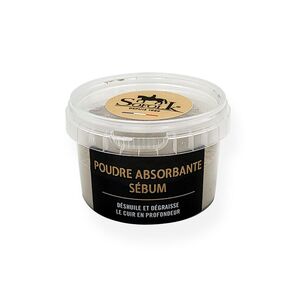 Sofolk Sebum Absorbing Powder - Natural Leather DegreaserPowerful natural degreaser
11,99 €
View product
-
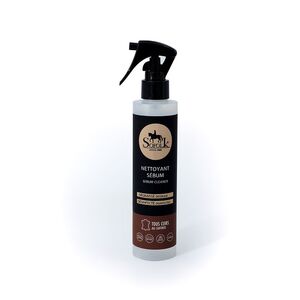 SOFA LEATHER SEBUM CLEANERCleaner / degreaser that extracts sebum.
12,99 €
View product
-
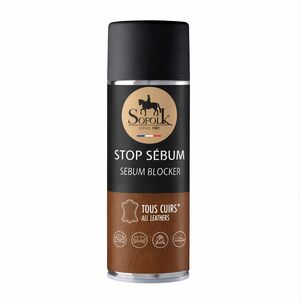 Stop sébum: The essential adhesion mediator for greasy, sticky leathersEnsures good adhesion on greasy leathers
24,99 €
View product
Recommended treatment on SYNTHETIC LEATHER
Use our Silky Varnish (satin or gloss) as a primer coat. This varnish has excellent adhesion on many surfaces and acts as an adhesion mediator between the surface and the paint.
If the problem persists after this primer, contact us so that we can identify a paint formulation compatible with your covering.
Application tip: apply the paint in thin coats, letting each one become completely dry before the next, then varnish only once the colour is completely dry and stable.
Need technical advice? We remain available for a personalised diagnosis based on your photos and a description of your conditions of use.

