



Car leather repair: seats, steering wheel, dashboard and door trims
The leather seats in your car wear over time because of friction, sebum, UV rays and temperature changes.
With Sofolk car upholstery restoration products, you can repair cracks, scratches, scuffs, holes and tears on seats, steering wheels, armrests and door trims yourself.
Since 1989, we have been a French manufacturer specialising in leather products. We offer two complementary products: leather healing glue and repair paste (liquid leather) for all types of leather.
Our products for repairing car leather
-
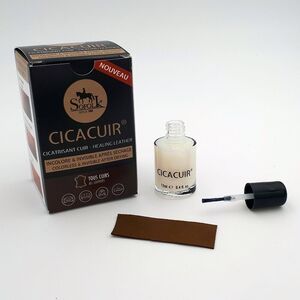 leather healing car seatsa unique and exclusive Sofolk product
14,99 €
View product
-
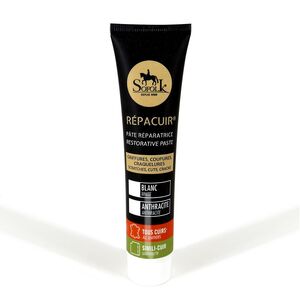 Repair paste leather car seatsRepairs scratches, cracks, cuts, holes on the leather of your seats
14,99 €
View product
-
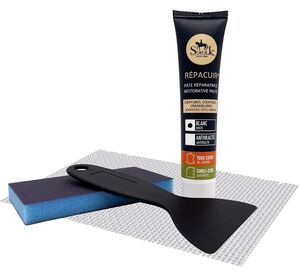 Leather car seat tear repairAllows the repair of a tear up to a maximum of 30cm, for a larger size, ask us.
19,99 €
View product
-
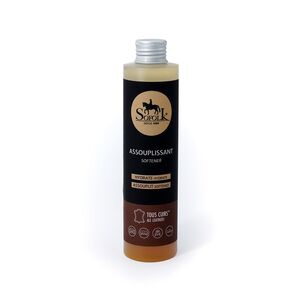 Car leather softenerTo restore the leather of your car to its original softness
19,99 €
View product
-
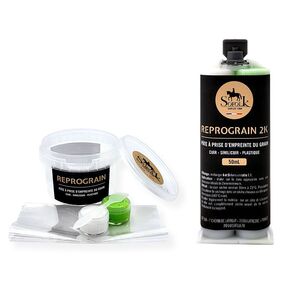 REPROGRAIN: PASTE FOR REPRODUCING GRAIN IMPRINTSFaithfully reproduces the grain pattern
19,99 €
View product
-
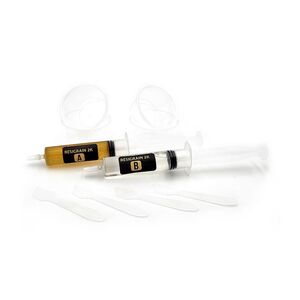 RésiGrain - Resin for grain reproductionGives the repaired area the grain of the surrounding leather
59,99 €
View product
-
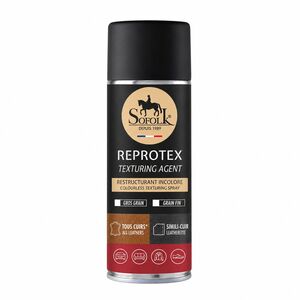 REPROTEX leather and faux leather – Texturing spray to blend in repairsRebuilds a surface texture on repaired areas
29,99 €
View product
-
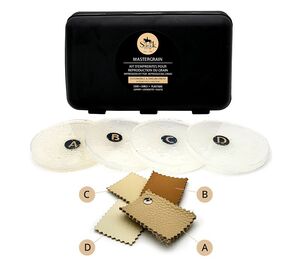 CMASTERGRAIN - LEATHER, IMITATION LEATHER AND PLASTIC GRAIN REPRODUCTION KIT4 ready-to-use moulds, from very coarse to fine grain
99,00 €
View product

When should you repair the leather of a car seat?
Whether you use your car every day or only occasionally, the leather of your seats and of the other parts of the interior (dashboard, armrests, trims) will wear.
The first signs of wear generally appear on the outer bolster of the driver's seat.
As soon as the first signs of wear appear, repair your leather to stop it tearing and becoming expensive to fix. The sooner you repair, the simpler and more discreet the repair will be.
Slightly cracked leather can be repaired in a few hours, whereas torn and faded leather needs a more complete intervention, including recolouring.
What kinds of damage to car leather can be repaired?
Self-adhesive patches for cars and nourishing creams moisturise leather temporarily, but do not repair it.
Sofolk products use the same raw materials as tanners and actually rebuild the material, thereby repairing the leather.
Even if the leather seats or other leather parts of your car are damaged, Sofolk repair products can restore them.
- Scratches and scuffs: the leather healing glue stops the damage from spreading and disappears into the grain of the leather as it dries.
- Cracks and splits: the repair paste fills the cracks. After sanding and recolouring, the surface is smooth and even.
- Holes and tears: use the reinforcement fabric (repair patch) as a backing. For large tears, contact us.
- Stiff, hardened leather: Sofolk leather softener restores flexibility to old leather that has become rigid.
- Crumbling leatherette: the repair paste treats crumbling leatherette (PU); remove the parts that are coming away, rebuild the surface, sand finely and recolour.
The Sofolk tip: send us a photo of your leather and we will tell you what to do. Go to our contact page or to the forum.
Repairing the leather of a car seat in 4 steps
The Sofolk method has 4 steps. Each one is necessary for a lasting, professional result. For a complete kit, see our range of renovation kits.
Step 1: deep cleaning
Never repair dirty leather. Sebum, poor-quality care products and pollution clog the pores: repair paste does not work on greasy leather.
Start with a deep clean using the Sofolk Cleaner / Stain Remover. For very dirty areas (steering wheel, armrests), it is best to also use the Sebum Cleaner.
Clean your car leather effectively with our range of products.
Step 2: repair
Choose the product that suits the type of damage:
- Leather healing glue: scratches, clean cuts, snags. Colourless, it disappears into the grain of the leather as it dries, with no need for recolouring if the cut is clean.
- Repair paste: cracks, holes, areas to be rebuilt. Available in white or anthracite, flexible once dry. Sand finely after drying for a smooth surface before recolouring.
For open tears, first apply the reinforcement fabric as a backing, then the repair paste in successive layers. You can tint the paste with a little pigment colourant.
Below is an example of a leather repair made with our liquid leather.


Step 3: recolouring
After drying and sanding, apply the Sofolk pigment leather colourant to even out the colour. It hides white marks and gives the leather back its original appearance. All car colours are available.
For an exact match, send us a sample of your leather.
Step 4: protection
To protect the recolouring from friction and UV rays, apply the Silky Lacquer. For heavily used areas, add the Hardener to increase mechanical resistance.
Protect your repair for the long term with our professional lacquers and waterproofing products!
Renovate your seats in a few hours for a budget 10 times lower than that of a professional upholsterer. You will get seats with no cracks, with the original grain and an even colour.
Leather restoration: repair paste and professional finish
After the leather has been repaired, the original grain is flattened or erased. For an invisible result, Sofolk offers grain reproduction tools.
- Reprograin: paste for reproducing the imprint of the leather's original grain.
- Résigrain: resin for grain reproduction. Ultra-fine, quick-drying.
- Mastergrain: complete grain reproduction kit for leather, leatherette and plastic. Reference samples to make selection easier. A durable, reusable solution.
Car leather repair kit: complete renovation in a single box
If your upholstery needs repair, recolouring and protection all at once, our kits bring together all the necessary products in a single box.
Available in 1-seat, 2-front-seat or complete-set formats, Sofolk kits give you a professional result from €39.99, where an upholsterer charges between €200 and €800 per seat.
Discover our all-in-one car leather renovation kits!
Why choose Sofolk to restore your car upholstery?
Since 1989, Sofolk has been a French manufacturer of leather repair products. Our formulas are developed with raw materials similar to those used by tanners, to guarantee lasting results.
We offer a colour-matching service. Send us a leather sample and we will create a made-to-measure colourant. Discover our range for car leather renovation.
After repair, nourish and care for your car leather regularly to prevent cracks.
Frequently asked questions: car leather repair
When should you repair the leather of your car seats?
As soon as the first signs of wear appear, it is important to carry out the restoration so that it is simple and invisible. Slightly cracked leather can be treated with the repair paste in a few hours.
Very badly damaged leather will need a more complete intervention with recolouring.
Can all kinds of wear on car leather be repaired?
Yes, whatever the size of the damage. Scratches are treated with the leather healing glue. Cracks, holes and tears are repaired with the repair paste and the reinforcement fabric.
For very large tears, contact us for personalised advice.
How do you repair the leather of a car seat step by step?
- Degrease with the Sofolk cleaner / stain remover.
- Apply the healing glue or the repair paste.
- Use the original-colour pigment colourant.
- Apply the silky lacquer to protect the repair from friction and UV rays. 1-2 hours for a slightly cracked seat.
How much does it cost to repair the leather of a car seat?
A professional upholsterer charges between €200 and €800 per seat. With Sofolk products, the repair costs €15 to €40 for individual items, or €39.99 for a complete renovation kit.
How do you repair crumbling leatherette?
Crumbling leatherette (PU) comes away in flakes. Remove the loose parts, apply the Sofolk repair paste, sand and recolour with the pigment colourant.
Finish with the silky lacquer. The colourant adheres to all leatherettes without an adhesion primer.
Do the seats need to be removed to repair them?
No, you can repair your car seats directly in the vehicle. Narrow areas (seams, creases) are treated with a sponge or brush. The protective lacquer is colourless and can be applied safely inside the passenger compartment.


