 FR
 EN
 ES
 IT
Dyeing the leather of your sofa
Can you dye a leather sofa?
It is a fair question, and one that may seem daunting if you don't plan to call in a professional. However, although the task looks complex at first glance, Sofolk can confirm that it is perfectly possible to dye your leather sofa at home. You do need to protect the space around your sofa and use suitable products for the best finish.
The condition and type of leather of your sofa also matter, and must be taken into account in your project.
-
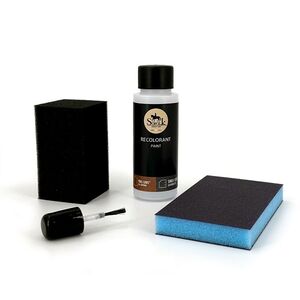 QUICK LEATHER TOUCH-UP KITOnly suitable for touching up small depigmented / discoloured areas
17,99 €
View product
-
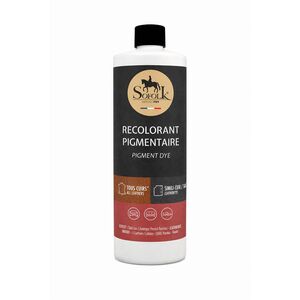 LEATHER PAINT SOFAGives a very satisfying appearance, very close to the original touch
24,99 €
View product
-
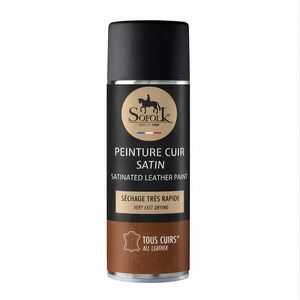 SATINATED LEATHER PAINT IN SPRAYVery high quality paint with fast drying
29,99 €
View product
-
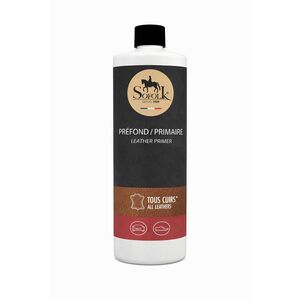 PRIMER FOR PIGMENT DYESGreatly enhances the penetration of Leather paint into the leather
19,99 €
View product
-
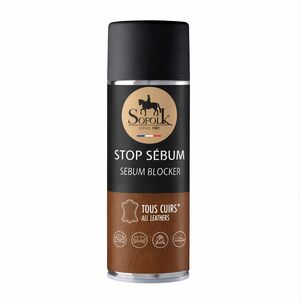 Stop sébum: The essential adhesion mediator for greasy, sticky leathersEnsures good adhesion on greasy leathers
24,99 €
View product
-
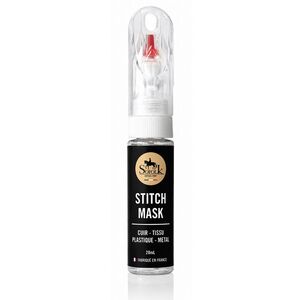 StitchMask - Masking Gel for Topstitching and Pre-painting SewingUltra-precise masking without adhesive
19,99 €
View product


Why dye a leather sofa?
A leather sofa is a premium purchase that stays with you for years, dressing your living room with unrivalled elegance. Over such a long lifespan, there may be several situations in which you would want to give your leather sofa a new dye:
A desire for change: Over the years, you may change your decor and want to alter the colour of your leather sofa to better suit your new tastes, while keeping the same comfort of use. You may also want to dye a leather sofa you have just taken on but that isn't quite to your taste. Either way, recolouring will make it feel like a brand-new leather sofa that you will be delighted with.
A renovation: If your leather sofa is damaged, holed, stained or cracked, it may be necessary to recolour it to conceal your repair work and perfect your renovation. You can then choose a shade identical to the original to make your leather sofa look as good as new and restore all its radiance.
How do you recolour the leather of a sofa?
With our Pigment Leather Colourant and our Leather Paint with integrated lacquer, you can recolour every type of leather without having to worry about its nature or finish : full-grain, full-hide, corrected-grain leather, aniline leather, dipped lambskin or cowhide, and so on. Whether you want to restore the original colour or change shade, our Sofolk products give you an incredible finish and are simple to use.
Whichever product you choose, you will first need to carry out a number of preparatory steps. These essential steps, which you will find below, guarantee an impeccable finish as well as lasting protection against repeated friction and household pollution. They are an effective way of preventing your colour from quickly turning dull.
Please note that these products are perfectly suited to smooth leathers but not to velvety materials. If you want to recolour a nubuck sofa, for example, we invite you to look at our specific solutions for your project, so that you order a suitable product and achieve the result you want.
Preparing the leather
- Initial cleaning: Use a cleaning product specific to leather to remove all traces of dirt, oil and residue. This is essential to ensure the dye adheres properly.
- Light abrasion: Lightly pass fine sandpaper over the surface of the leather. This step opens the pores of the leather, helping the dye to adhere.
Repairing imperfections
- Small cracks: Apply CicaCuir to fill minor cracks and fissures. Leave the product to dry completely before moving on to the next step.
- Damaged areas: For tears or more badly damaged areas, use RépaCuir. Apply it in thin layers, letting each layer dry before applying the next.
Applying the dye
- Preliminary test: Test the dye on an inconspicuous area of the sofa to check compatibility and the effect of the colour.
- Dyeing: Apply the dye in thin layers using a foam roller or a brush. Make sure each layer is completely dry before applying the next. For an even colour, it is recommended to dye the whole sofa.
Protection
- Applying the lacquer: Once the dye is completely dry, apply a coat of special leather lacquer to protect the new colour. You can choose a gloss or matt finish according to your preference. Allow the lacquer to dry thoroughly.
Moisturising
- Final moisturising: Use Sofolk Nourishing Oil to moisturise the surface of the leather and preserve its suppleness. Apply a small amount of oil and rub gently with a clean cloth.
Ongoing care
To prolong the beauty of your recoloured sofa, clean and moisturise the leather regularly using suitable products.
How do you apply the products to dye your leather sofa?
First of all, we advise you to protect the floor, as well as the furniture near your leather sofa, to avoid any accidental splashes or airborne particles of colourant if you are working indoors. More generally, dyeing your leather sofa should be done between 15°C and 25°C, out of direct sunlight, for an impeccable, streak-free finish.
For the Sofolk Pigment Leather Sofa Colourant, apply the product with a foam roller, making sure you use enough product to avoid visible marks where you have passed. You can also use a brush for creases and hard-to-reach surfaces. Once it has dried, all that remains is to apply a protective lacquer to preserve your new colour.
As for the Sofolk Leather Paint with integrated lacquer, we recommend starting with a quick degreasing with acetone so that the shade grips the leather better. You can then take advantage of its constant-flow spray to apply the paint over the whole surface of your sofa.
For both products, we invite you to be sure of the quantity you need, so as to avoid dyeing in two stages, which could create a visible dividing line.
If you have any questions about which colourant to order, or how to use it, our teams are available by telephone, and on our forum, to answer your questions and help you dye your leather sofa. You will also find an FAQ for our colourant in the useful links at the bottom of this page.
With over 30 years of expertise, Sofolk develops high-quality renovation and recolouring products, designed to be simple to use and within everyone's reach. What's more, the raw materials we use to make our dye for leather sofas are identical to those used by tanners in their treatments. A professional range for a stunning result that will bring your leather sofa back to life. Sofolk products have been recommended on several occasions by national magazines, as well as by verified customer reviews, and are a commitment to quality that is close to our hearts.
Shipped direct from the manufacturer in Bordeaux, our dyes are delivered to your home as quickly as possible. Fast delivery lets you plan calmly to dye your leather sofa at home, even at the last minute. French manufacturing, for its part, brings you unrivalled know-how and premium products for perfect leather sofa recolouring.
Sofolk is also a professional, expert service at your disposal, to support you in all your leather recolouring projects. You can count on our teams to give you sound advice over the telephone through our technical support, and also by message via our forum, where you can post photos of your leather sofa for more precise guidance. You will also find tutorials and explanatory pages, in addition to the FAQ mentioned above. A varied range of support to guide you at every stage of dyeing your leather sofa, and to ensure you get the result you want.
What is a leather sofa dye?
A dye is a pigment colourant that passes through the outer layer of the leather, then penetrates right into the heart of the fibres. It is applied to so-called "dipped" leathers or those with an aniline finish. These are generally quality leathers with a particularly beautiful look. Our leather dye comes in an aerosol and is therefore applied by spraying only.
What is a leather sofa paint?
Unlike a dye, leather paint is a pigment colourant that evenly covers the outer layer of your leather. This colourant is applied to smooth or grained leathers whatever the finish. It is therefore not suitable for velvety leathers such as suede or nubuck.
Smooth or aniline leather?
To determine the finish of your leather, use a cotton bud soaked in acetone or nail varnish remover, then rub it on a hidden area of your leather. If the colour doesn't change or lightens slightly, your leather has a smooth finish. If a film starts to come away, or if the leather darkens and absorbs the product, the dye of your leather sofa is aniline or semi-aniline.
Generally speaking, 90% of leather sofas have a smooth finish, with the exception of club armchairs.
Once again, we stress that when renovating a leather sofa or a club armchair, there is no need to wonder about the finish of your leather. Because the leather has to be lightly sanded and degreased with acetone, the existing finish will be destroyed so that a new one can be built.
What not to do when dyeing a leather sofa
When you dye a leather sofa, there are several mistakes to avoid in order to guarantee an optimal, long-lasting result. Here is what not to do:
-
Don't dye unrepaired leather :
- If there is too much wear (crazing, cracks, scratches, etc.), it is best to repair the leather of your sofa first.
- If there is too much wear (crazing, cracks, scratches, etc.), it is best to repair the leather of your sofa first.
-
Don't skip the colour test :
- Don't neglect to test the colour on a small hidden area before dyeing the whole sofa. This lets you check the compatibility and adhesion of the dye.
- Don't neglect to test the colour on a small hidden area before dyeing the whole sofa. This lets you check the compatibility and adhesion of the dye.
-
Applying coats that are too thick :
- Don't apply thick coats of dye. It is better to apply several thin coats, letting each one dry completely before applying the next.
- Don't apply thick coats of dye. It is better to apply several thin coats, letting each one dry completely before applying the next.
-
Not following the renovation steps and drying times :
- Don't rush the drying process. Make sure each coat of dye is completely dry before applying the next. Follow the Sofolk method and all its steps closely!
- Don't rush the drying process. Make sure each coat of dye is completely dry before applying the next. Follow the Sofolk method and all its steps closely!
-
Using unsuitable products :
- Don't use products that are not specific to leather, such as unsuitable paints or dyes. This could damage the leather and give an unsightly result.
- Don't use products that are not specific to leather, such as unsuitable paints or dyes. This could damage the leather and give an unsightly result.
-
Not protecting the leather :
- Don't neglect to apply a protective lacquer after dyeing. It protects the colour and extends the life of the dye.
- Don't neglect to apply a protective lacquer after dyeing. It protects the colour and extends the life of the dye.
-
Not working in the right conditions :
- Don't dye your sofa in unsuitable conditions. Work in the shade, between 10 and 25°C, and avoid dusty environments.
- Don't dye your sofa in unsuitable conditions. Work in the shade, between 10 and 25°C, and avoid dusty environments.
-
Not maintaining the leather :
- Don't neglect the regular care of your sofa after dyeing. Use suitable products such as the Protective Lacquer and Sofolk Nourishing Oil to maintain the suppleness, resistance and radiance of upholstery leather.
By following this advice and these steps, you will maximise your chances of achieving an even, long-lasting result. For more details, you can consult our complete instructions here: Leather renovation instructions.


