 FR
 EN
 ES
 IT

HOW DO YOU REPAIR A HOLE IN LEATHER?
Does the leather of your sofa, car seat or handbag have a hole or a puncture?
Not sure whether a hole in your leather can be repaired, or whether anything can be done to restore its original appearance? Don't panic, it is perfectly possible to fix this: just follow this short guide.

The products to buy to repair your leather with a hole
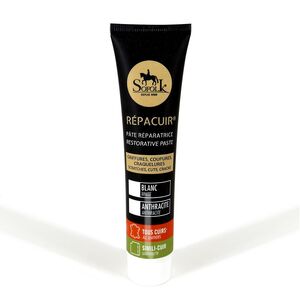
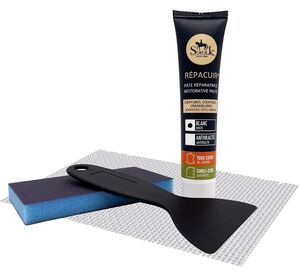
Repairing leather with a hole in it may seem a daunting task, but with the right techniques and the right products, it is entirely possible to give your sofa, car seat or any other leather item a second life. Here is a detailed guide to help you through the process.
1) Repairability: Assessing the damage and preparation
Identify the material with the hole: leather or imitation leather / leatherette?
Whether the material is leather or leatherette / imitation leather / faux leather, a hole can definitely be repaired. However, the method and the products differ. In this section we will only cover repairing a hole in leather.
Identify the type of leather: smooth or napped?
To keep things simple, there are 2 types of leather: smooth leathers, which are easy to repair, and napped leathers (such as nubuck and suede), for which we invite you to contact us if needed.
If your leather is a smooth leather, grained or not, read on, as this article concerns you.
Hole going right through or not?
If the hole has not gone through the leather, simply fill it with our leather repair paste. As this product is white, you will then need to recolour your sofa or car seat with our leather paint. This covering paint, made in your original colour or any other shade, will properly conceal your repair. On this point, please note that we can make your colour to measure from a sample sent to us. Contact us about this for more information.
Determine the size of the hole: Carefully examine the size and nature of the hole. Is it a small snag, a medium tear or a hole going right through? The size and depth of the hole will determine the repair method to use.
Clean the area: Before starting the repair, thoroughly clean the area around the hole with acetone and our leather cleaner. This removes dirt, oils and other contaminants that could prevent the repair products from adhering properly.
Gather your materials: Make sure you have all the necessary materials to hand: Cleaner, RépaCuir, Leather paint, Protective varnish, a piece of leather of the right size and finally all the required accessories.
2) Repair methods according to the type of hole
Small holes and snags: For small holes and snags, use RépaCuir. Apply a small amount of product to the hole and smooth it with a spatula. Leave to dry completely before sanding lightly to obtain a smooth surface.
Tears and medium-sized holes: For medium-sized tears and holes, RépaCuir is also ideal. Apply the product in thin coats, letting each coat dry before applying the next. This gradually fills the hole and reinforces the damaged area.
Leather patch: For larger holes, a leather patch may be needed. Cut a piece of leather slightly larger in diameter than the hole and glue it beneath the damaged area. Then use RépaCuir to fill the edges and smooth the surface.
Through holes and major tears: Holes going right through and major tears require a combination of techniques. Use a leather patch to reinforce the area, then apply RépaCuir in successive coats. For very wide tears, it may be necessary to consult a professional.
Combining techniques: Sometimes a combination of techniques is needed to achieve the best result. For example, a small hole may require both CicaCuir and RépaCuir for a lasting repair.
3) Finishing touches and professional tips
Colouring: Once the repair is complete, it is time to recolour the repaired area. Apply the leather dye in thin coats, observing the drying times. For an even colour, it is recommended to dye the whole surface.
Caring for the repaired leather: After the repair and colouring, apply a protective varnish to seal the colour and protect the surface for better resistance. Also use our Nourishing Oil to moisturise the leather and keep it supple.
Prevention: To avoid future damage, care for your leather regularly with specific products. Avoid direct exposure to sunlight and heat sources, and clean stains immediately.
Repairing leather with a hole requires patience and precision, but with the right products and techniques, you can achieve a professional result. Remember that prevention and regular care are essential to extend the life of your leather. If you have any questions or need assistance, please do not hesitate to contact us.


