 FR
 EN
 ES
 IT

Dyeing your leather shoes: reviving or changing the colour
Your favourite shoes have faded. The black is turning grey, the brown is dulling at the creases, a repair leaves a paler mark than the rest. All is not lost.
Dyeing leather gives your shoes a second life, by restoring their original colour or giving them a brand-new one, without leaving home.
You still need to tell apart two steps that are often confused: reviving a tired colour, and genuinely changing colour. The first softens, the second covers. The product is not the same, and neither is the method.
Colour is, moreover, only one stage among others: to renovate your leather shoes from top to bottom, cleaning and repair come before it, and care extends it once the colour is applied.
Our products for dyeing your leather shoes
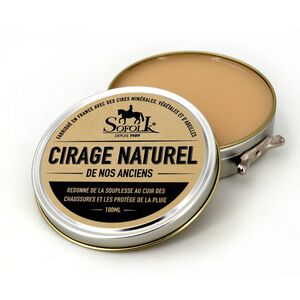
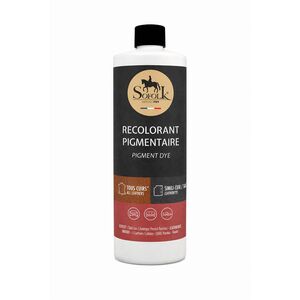
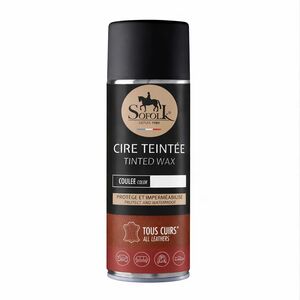
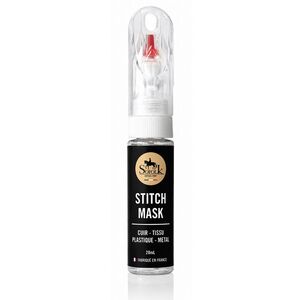
Sofolk makes three families of products for recolouring smooth leather shoes, from the discreet tinted film that revives to the paint that covers, plus a gel that protects the seams during the operation.
The right choice depends on the type of leather and the effect you want.
Reviving or changing colour: which product should you choose?
It all starts with a simple question: do you want to restore the original colour, or adopt a different one? Your answer points to the right product, and saves you buying an opaque one where a tinted film would have been enough.
| Your need | The Sofolk product | What it does |
|---|---|---|
| Reviving a dulled original colour | Old-Fashioned Natural Shoe Polish | Nourishes and revives without darkening, glossy finish, 8 colours including a colourless one |
| Softening discolouration and waterproofing | Tinted wax | Aerosol tinted film that brings the colour back up and protects against water |
| Changing colour or hiding a repair | Leather paint for shoes | Opaque pigment, 21 colours, covers the old colour |
When the colour is simply tired, there is no need to cover everything. The old-fashioned natural shoe polish, made with beeswax and carnauba wax, redeposits a tinted film that nourishes the leather and restores its shine, without darkening it.
It is spread with a brush or a cloth, left to penetrate for a few minutes, then buffed. For polishing your shoes, keep this polish for smooth leather: it is not suitable for suede, nubuck or patent leather.
The tinted wax works as an aerosol: it brings back the colour of leather that has faded at the creases, protects the leather from rubbing and waterproofs it in the same step.
These two films remain non-opaque: they soften wear without ever hiding a distinctly different colour.
To go from a light leather to a noticeably darker shade, or to hide the mark of a repair, turn to the opaque leather paint for shoes.
Available in 21 colours, it deposits an opaque pigment that covers the old colour in two to three coats, with a sponge or a brush.
A 60 ml bottle is enough for one or two pairs, and its water-based formula is applied without a bonding primer or fixative.
Dyeing leather shoes in 4 steps
Reviving with a tinted film needs little preparation; covering with paint demands more. Here is the complete process for a successful dye job, step by step, with no nasty surprises as it dries.
Step 1: dust and degrease before dyeing
Dye only takes hold on sound leather. Remove dust, old polishes and greasy substances, otherwise a greasy film repels the colour and causes rings.
For a simple revival, a mild soap will do; before an opaque paint, you need to strip more thoroughly.
The Sofolk leather stripper and degreaser, more effective than the acetone sold in supermarkets, bares the leather by removing grease and old finishes.
Keep it for this preparation: it is not an everyday cleaner.
Step 2: before painting, sand the leather and mask the seams
Before an opaque paint, a light sanding with very fine sandpaper, pressing no harder than the weight of your hand, opens the grain, helps the pigment hold better and completes the preparation of the leather.
Also protect the topstitching and seams with StitchMask: this masking gel goes on without adhesive and comes off without residue, to keep seams neat.
A simple revival with a tinted film does not need this preparation.
Step 3: apply the dye in thin coats
Now for the colour. Apply the dye in thin, even coats, with a sponge or a brush for paint, with a brush or in fine sprays for a tinted film.
Two or three light passes are better than a single thick coat, which dries badly and marks the leather.
Leave to dry between coats, and always dye the whole pair in one go, so that the colour of your shoes stays uniform from one end to the other.
Step 4: protect the colour and make it shine
A freshly applied colour needs a shield. After painting, seal the colour with a colourless shoe polish or a protective wax: the satin film fixes the pigment and defends it against rubbing.
A final buff with a cloth makes the leather of your shoes shine and reveals the depth of the colour.
The result keeps all the better when regular care takes over and protects the dye in the following months.
Before and after dyeing: repair, then care
Dyeing is part of a chain of steps. Beforehand, on damaged leather, the colour shows up every flaw instead of rubbing it out: here is how to repair cracks and cuts first. The dye will then even out the surface.
Afterwards, colour has to be earned over time. Well-treated leather keeps it longer and resists water better.
Here again, the right follow-up exists: here is how to protect and nourish your shoes after dyeing, so as not to undo in three weeks the work of an afternoon.
Why choose Sofolk to dye your shoes
Sofolk designs its leather paints in France, near Bordeaux, and has been working with leather for over thirty years.
On a pair to be dyed, everything comes down to the colour chart: the opaque paint is available in 21 colours, and when none matches your model exactly, the workshop creates a custom colour from your sample.
It is hard to be more precise about the original colour. Our tutorials and our mutual-help forum, where everyone shares their before and after photos, complement each product, and the team can be reached by telephone to guide you towards the right colour and the right quantity.
Frequently asked questions about dyeing leather shoes
Can you dye leather shoes?
Yes, provided it is smooth leather. A dye revives a dulled colour or applies a new one, depending on the product chosen.
Suede, nubuck and patent leather cannot be dyed with these leather paints, because their surface does not hold the pigment in the same way. On clean, degreased smooth leather, the result lasts.
How do you revive the colour of dulled leather shoes?
To revive a tired colour without changing it, choose a natural shoe polish in the right colour or an aerosol tinted wax.
The polish is spread with a brush or a cloth, then buffed; the tinted wax is sprayed in thin coats, dries in four hours, before a final wipe with a soft cloth.
The polish nourishes the leather, the tinted wax protects it from rubbing, and both soften wear without hiding a genuinely different colour.
How do you dye dark leather shoes a lighter colour?
A tinted film such as shoe polish or tinted wax only revives the colour already there; it does not lighten it or change it.
To move towards a lighter shade, you therefore need an opaque paint, which covers the old colour in two to three coats on dry leather that has been lightly sanded and degreased.
Do you need to sand and degrease before dyeing your shoes?
It depends on the product. For a simple revival with shoe polish or tinted wax, a careful clean is enough.
Before an opaque paint, a light sanding with fine grit and degreasing become essential, because they open up the leather and ensure the pigment adheres.
Without this preparation, the colour holds badly and ends up flaking.
How many coats do you need to dye leather shoes?
Allow two to three thin coats of opaque paint for an even result, rather than a single thick coat that dries badly.
Leave to dry between passes and dye the whole pair in one go. A 60 ml bottle covers one to two pairs, so work out the quantity before you start to avoid visible demarcation lines.


