 FR
 EN
 ES
 IT

Waterproofing a leather jacket against rain and stains
A biker jacket caught in a downpour, a road jacket taking the rain at full speed: without a water-repellent barrier, water seeps into the fibre, marks the leather and gradually carries off its natural oils.
Waterproofing a leather jacket gives it an invisible shield that lets water bead and run off, keeps stains at bay and preserves the look of the garment from one season to the next.
What remains is to choose the right product for the hide, and to apply it in the right order. This guide reviews the leathers that suit it, the method and the frequency.
Our products for waterproofing a leather jacket
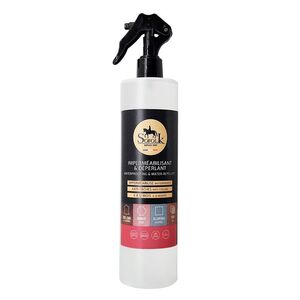
Which leather can be waterproofed?
Before applying anything, a look at the type of leather is essential. Not every hide takes the same barrier.
- Smooth, full-grain or pigmented leather: it accepts the water-repellent waterproofing protector as well as the wax or the finishing varnish, as you prefer according to the finish you want.
- Nubuck, suede and velvet leather: on these raised-nap hides, use neither wax nor varnish, which would flatten the pile; they are protected with the same water-repellent waterproofing protector as smooth leather, on a clean, dry hide. By contrast, skip the oil nourishing described below: these hides reject it.
- Oily or waxed leather: already partly water-resistant, it needs only a light water-repellent, with no top coat that would make the surface sticky.
If in doubt about a velvety material, a test on a hidden area, inside a panel, avoids the unpleasant surprise of a ring mark.
Why waterproof a leather jacket?
Leather is a porous hide. Left bare, it drinks in rain and damp, marks at the slightest splash of grease and sees its colour dull wherever water has penetrated.
A water-repellent treatment reverses the logic: water beads into drops and rolls off without penetrating, a spilt coffee can be blotted up before it has stained, and the greasy dust of the road no longer clings.
On a garment worn in all weathers, this barrier spares you a great deal of cleaning.
Waterproofing your leather jacket in 3 steps
The job needs no special knack or equipment, only a clean surface and a little patience between coats.
Step 1: clean and leave to dry
A water-repellent would seal in the dirt if applied to a dirty hide. Start by cleaning a leather jacket before waterproofing it with a suitable cleaner, without rubbing the fibre, then leave the leather to dry at room temperature, away from radiators and direct sunlight.
A clean, perfectly dry surface lets the product bond and last.
Step 2: apply the water-repellent waterproofing protector
Soak a microfibre cloth with the product, then spread the water-repellent in two or three thin, even coats, without drenching the material.
Cover the whole surface, including the seams and the areas of friction, where water seeps in first. Carried by silicon nanoparticles, the anti-stain water-repellent waterproofing protector slips into the grain without colouring it or changing the feel of the leather.
Step 3: renew the barrier
The water-repellent effect does not last forever: with the Sofolk waterproofing protector, it holds for six to twelve months depending on exposure to rain and friction.
Apply it again as soon as water stops beading on the surface: that is all the maintenance the protection needs over time.
A leather jacket that is heavily exposed to the road, and more hard-worn than a town jacket, needs this renewal more often.
Wax and finishing varnish: when to choose them?
Waterproofing protector is not the only route. The protective wax also makes the grain of the leather water-resistant, while giving it a satin, candle-like feel; easier to spread than the silky varnish, it suits regular use, even if it holds up a little less well to friction.
The silky varnish, for its part, seals the surface and shelters the colour of the areas that rub, when you want a fine finish as much as a barrier.
On smooth leather, these three treatments can be combined: varnish or wax as a base, water-repellent as the final coat for the water-resistant effect.
The motorcycle jacket in the rain and the PPE framework
On the road, waterproofing mainly changes comfort: leather that keeps the water out stays lighter and warmer in a downpour.
Its action concerns water and stains, never the hide’s resistance to abrasion. When a jacket meets the EN 17092 standard, it acts as personal protective equipment through the thickness of its leather and the strength of its seams, which no surface treatment can reinforce.
After a fall, a split hide or a broken seam calls for a professional check, when it does not mean replacement; no water-repellent can restore to a jacket the protection that an impact has taken from it.
Before waterproofing: clean, then nourish
Waterproofing comes last, on a hide that has already been restored. Leather covered in dust or grease would hold the water-repellent poorly; the first step is therefore to clean the jacket, as step 1 reminds you.
It is better to repair a crack before waterproofing it, because an open crack drinks in the water-repellent.
It is then preferable to nourish a leather jacket before waterproofing it: a well-fed fibre holds the water-repellent barrier better, provided you let the treatment soak right in and wipe off any excess grease before the first coat.
On nubuck, suede or velvet leather, this step is skipped: these hides reject oil, which would flatten their nap.
To place this step within the overall care routine, our guide to restoring a leather jacket sets out the complete order, from cleaning to the final protection.
Why choose Sofolk to waterproof your leather jacket
Based in the Gironde since 1989, at Sofolk we make our own waterproofing protectors and varnishes ourselves, designed to stand up to rain without stiffening the leather or distorting its colour.
The same workshop therefore follows the jacket from its cleaning through to the water-repellent barrier, on lambskin as on a road jacket.
Unsure between the wax, the varnish and the water-repellent? A photo of your leather sent to the workshop earns you tailored advice, by message or by telephone.
Well protected, leather gets through showers without drinking in the water or staining; without a barrier, it darkens in patches and keeps the mark of the first storm.
Frequently asked questions about waterproofing a leather jacket
How often should you waterproof a leather jacket again?
Allow one application every six to twelve months, depending on exposure to rain and friction. A road jacket, more heavily used than a town jacket, is retreated more often. The sign is unmistakable: as soon as water stops beading and soaks into the leather, a new coat is needed.
Can you waterproof a nubuck or suede jacket?
Yes, with the same water-repellent waterproofing protector as on smooth leather. However, these raised-nap hides tolerate neither wax nor varnish, which would flatten the pile, nor nourishing oil, which they reject. A discreet test on a hidden area remains the rule; if in doubt, the workshop will guide you.
Do wax or varnish darken the leather?
Neither is a colouring product: the protective wax and the silky varnish leave a satin finish that can make the colour look deeper, without changing it. Unsure about a pale or delicate shade? A test under a turn-up settles the question. The water-repellent waterproofing protector, for its part, remains colourless.
Should you clean a leather jacket before waterproofing it?
Yes, without exception. Applied to dusty or greasy hide, the water-repellent traps the dirt under its barrier instead of protecting clean leather. Clean the jacket, leave it to dry right through, then apply the product. A clean surface lets the protection bond and last far longer.
Does the waterproofing protector change the feel of the leather?
Hardly. The water-repellent waterproofing protector settles into the grain without leaving a film or any shine, and the feel remains that of leather. The wax leaves a satin, candle-like finish, while the silky varnish gives the leather a feel close to the factory finish. Each to their own, depending on the effect you want.


