 FR
 EN
 ES
 IT

Nourishing, moisturising and softening a leather jacket
Leather that pulls at the shoulders is thirsty. When a jacket creaks as you put it on, looks dull or stiffens at the back of a wardrobe, it needs nourishing. Leather is still a skin: deprived of oils, it dries out, stiffens, then splits in the hollow of the creases, where the material works with every movement of the arm.
Properly nourished, the leather regains its suppleness and softness, on a town biker jacket as on a motorcyclist’s jacket exposed to rain and sun.
This treatment is only one step in complete leather care, detailed in our guide to renovating the leather of a jacket. It takes each step in order, from cleaning to the final protection, and places nourishing just after recolouring.
Our products for nourishing and moisturising a leather jacket
What care should you give your jacket according to the type of leather?
Before nourishing, the leather has to accept the treatment. Smooth, full-grain, pigmented or oiled leathers, those of a biker jacket as of a road jacket, can be nourished and moisturised without any reluctance.
Velvety leathers, on the other hand, nubuck, suede and velour, refuse oil: it would flatten their nap and mark the surface.
These leathers call for specific care. A soft nappa leather, a patinated vintage leather or a new leather that is still stiff can all be nourished, provided they remain smooth.
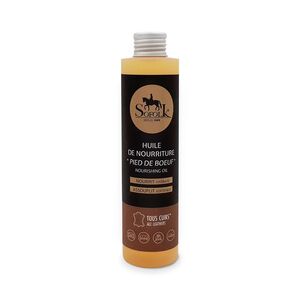
The treatment rests first on the nourishing oil known as “neatsfoot”: it slips between the fibres and feeds the leather deeply, until it gives suppleness and softness back to leather that has become dull and cracked.
Where body cream or lotion sits on the surface, clogs and wears out the seams, this tannery-grade oil goes down to the dermis.
Leather that is merely stiff is satisfied with it; on hardened leather, the softening balm takes over from the oil. To get started, a kit brings together the essentials in a single box.
Why a leather jacket dries out and stiffens
A leather jacket keeps pace with its wearer. With every outing, a little of its oils goes. The sun draws water out of the leather and fades the colour, cold and showers wash away the original oils, while acidic perspiration wears down the collar and cuffs.
A long stay in a wardrobe or a garage finishes drying out leather left to itself, which needs a supply of oils to hold up.
Spotting dry leather takes no expert eye: it stiffens as you put it on, becomes rough and dull, and fine cracks underline the creases. Stepping in at that point keeps the leather supple: well-nourished leather withstands everyday friction without you then having to repair a scuff on a leather jacket. Regular care remains the surest prevention.
How to nourish and moisturise your jacket, step by step
Nourishing leather needs few tools, but a real pause for penetration. On clean, completely dry leather, proceed in three stages.
Apply the oil in a thin layer
Soak a soft cloth with a drizzle of nourishing oil, then apply it in a thin, even film, section by section. Concentrate on the places that pull: elbows, shoulders, lower back. If the leather darkens a little on contact, it is drinking in the treatment.
Let it penetrate
Hang the garment on a wide hanger and allow the oil several hours to sink in, ideally a full night, at room temperature, well away from any source of heat. Very thirsty leather may need a second application the next day.
Buff to finish
Remove the excess with a clean microfibre cloth, then buff in light circular movements, for a matt finish and a softened feel. The leather should come out nourished and moisturised, without ever feeling sticky under the fingers.
Softening a stiff leather jacket
A new leather that has stayed hard, or an old jacket stiffened at the back of a wardrobe, deserves to be relaxed before long days of wear.
When nourishing oil is no longer enough, Sofolk offers a softener for hardened leathers, to be spread in a thin layer like the oil, then left for the fibre to relax by itself. Suppleness returns in stages, without forcing the material.
Protecting and waterproofing after nourishing
Well-nourished leather holds all the better the barrier that will protect it from the rain. Nourishing gives the leather its suppleness back, but does not waterproof it: as soon as the treatment has penetrated and the excess oil has been wiped away, it is time for the next step, the last in the routine.
It has a page of its own, which indicates which product to apply according to the leather and how to waterproof a nourished leather jacket, from smooth leather to hides that refuse oil.
The motorcyclist’s case: worn leather and the PPE framework
A motorcyclist’s jacket is more than a simple garment: it is a second skin that faces the wind, the rain and the miles flying by. Nourishing it often keeps its suppleness and riding comfort.
These steps nevertheless act on the look and feel of the material, never on the jacket’s original resistance, including when it is certified to the EN 17092 standard.
No treatment, however meticulous, will give back to the leather the protection that a fall has torn away. Leather pierced or a seam burst on the tarmac: head to a professional, or replace the jacket outright, rather than counting on oil to put everything right.
Before nourishing: clean the jacket
Oil refuses to penetrate leather covered in dust and grease: it stays on the surface and seals the dirt into the fibre. The first reflex is therefore to clean a leather jacket before nourishing it, then to dry it right through, because a clean fibre absorbs the treatment far better than dirty leather.
Why choose Sofolk to nourish your leather jacket?
A manufacturer rooted in the Gironde since 1989, Sofolk develops its oils to feed the fibre deeply, not to varnish it on the surface.
This mastery of recipes means that a single range supports a jacket, from the first nourishing treatment to the barrier against rain, on lambskin as on a road jacket.
Hesitating between two treatments? Send a photo of the jacket to the workshop: the answer comes by telephone or on the forum.
Nourished at the right pace, leather keeps its softness and colour for years, whereas neglected leather hardens and splits with no hope of return.
One last tip: between outings, hang the jacket on a wide-shouldered hanger, in the open air rather than in a closed garment bag.
Frequently asked questions about caring for the leather of a jacket
How often should I nourish the leather of a jacket?
Two to three applications a year suit a frequently worn jacket, a little more for a motorcycle jacket exposed to sun and rain. Trust your touch: as soon as the leather pulls, turns rough or loses its sheen, nourish it. There is no point overdoing it, a thin layer matters more than an excess of oil.
Which oil should I choose to nourish a leather jacket?
A nourishing oil known as “neatsfoot”: it runs between the fibres and gives suppleness back to the leather, even when cracked. Spread it in a thin layer on clean leather, then leave it to work. Avoid body creams and cleansing milks: they do not get past the surface and end up damaging the seams.
Should I waterproof a leather jacket after nourishing it?
Yes, once the leather is clean and nourished. Supple, well-fed leather is not necessarily safe from the rain: a water-repellent barrier, applied afterwards, keeps water and stains at bay. The method, product by product, is on our dedicated page on waterproofing.
How do I soften a stiff leather jacket?
On leather that is merely dried out, nourishing oil already restores some suppleness. On hardened leather, spread a softening balm in a thin layer, press into the creases, then allow it several hours of rest on a wide hanger. The softness comes back gradually, without forcing the material.


