 FR
 EN
 ES
 IT
Dyeing a leather jacket: revive or change the colour yourself
At the shoulders, the collar and the elbows, years of rubbing end up lightening the colour of leather: a deep black turns grey, a tan biker jacket pales, a road jacket fades under UV and rain.
Dyeing a leather jacket restores its original colour, or gives it a new one, with no plastic look and no added thickness.
But the hide needs to be well prepared for the result to last. Here is which product to choose, then how to apply the colour yourself in five steps.
Our products for dyeing a leather jacket
Dyeing or recolouring: two different jobs
These two terms cover quite distinct operations, and confusing them often leads to disappointment. Dyeing in the strict sense soaks the leather right through: it only takes on aniline hides, which are unpigmented and rare on a garment.
Most jackets are made of pigmented leather, whose colour lives on the surface. For these, the right answer is recolouring: a pigmented leather paint lays down a fine layer of colour that follows the grain without stiffening it.
This leather paint strikes the right balance between covering power and penetration, which rules out the faux-leather look and keeps the hide’s original texture.
For a single lightened area, a touch-up kit is enough; for a whole sleeve or back, the aerosol leather paint gives a more even coat.
Dyeing right through is another skill altogether: to dye the leather of an aniline hide or of an item that is not a garment, our general guide explains how to dye leather according to its nature, from the colour test to the choice between penetration and surface pigment.
Dyeing a leather jacket in 5 steps
A fine recolouring is won first through preparation. Following the order of the five steps and giving each coat time to dry is what separates a colour that lasts from one that flakes by the first winter.
Step 1: degrease the leather before the colour
Pigment never takes on greasy or dusty leather, so the first step is to clean the leather jacket first, with a degreasing stripper, over the whole surface.
On the collar and cuffs, saturated with sebum, the sebum stop neutralises the grease and secures the grip of the colour. A test on a hidden area remains the rule before treating the whole garment.
Recolouring revives the look of the leather, never its strength: a jacket that has been in an accident should first go to a professional before any recolouring.
Step 2: prepare the grip and mask the topstitching
On greasy or difficult leathers, a bonding primer prepares the surface and helps the pigment bite into the fibre.
Then apply a masking gel to the topstitching and seams, which peels off without residue once the colour is on: it spares the threads, which are often a different shade that you do not want to cover.
Step 3: apply the leather paint in thin coats
Apply the leather paint in light coats rather than one thick layer. A sponge or a fine brush deals with the seams and hollows, while the aerosol covers large surfaces with an even coat.
One or two coats revive leather that has simply turned grey; allow two to three to move from one shade to another. Between each pass, patience always matters more than the amount of product applied.
Step 4: respect the drying time
Leave each coat to dry in the open air, with no lamp or hairdryer to force the pace. Drying carried through to the end determines the final bond and how well the colour withstands rubbing.
A pigment rushed by heat cracks and flakes much sooner than it should.
Step 5: protect the colour
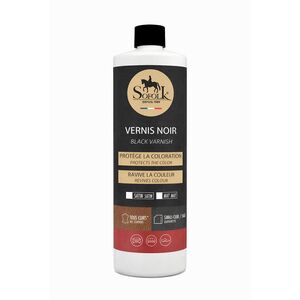
Fix the recolouring under a finishing varnish, matt or satin depending on the finish you want, which shelters the colour from the rubbing of a bag or belt and from UV. About a month later, a nourishing treatment restores the leather’s suppleness.
Finally, remember to protect a recoloured leather jacket with a water-repellent barrier, so that rain does not mottle the brand-new colour.
Reviving a faded shade or changing colour completely
Two related needs are dealt with using the same range. Reviving means restoring the intensity of leather that has merely turned grey or dull: one or two coats in the original tone erase the wear on the shoulders and back.
A colour that is not on the colour chart? From a sample of your hide, Sofolk makes it up to order.
Changing shade decisively, from a tired tan to a dense black for example, calls for three coats and drying times followed to the letter; the pigment also adheres to faux leather.
In both cases, a sound surface makes all the difference to the result, and it is better to repair the scuffs before applying the colour, otherwise the colour emphasises the flaws instead of erasing them, and the grain takes it poorly.
Smooth leather, nubuck and suede: the limit of the job
Pigmented recolouring is aimed at smooth leather, as found on a biker jacket, a town jacket or a road jacket. On these hides, the pigment settles and holds.
Nubuck, suede and velvet leather, for their part, have a raised nap that the leather paint would flatten: they are not dyed this way, at the risk of crushing their pile and stiffening the material. An aniline hide, coloured right through and with no surface finish, also falls outside this scope, and its recolouring is a job for the workshop.
If in doubt about the nature of your leather, a discreet test under a turn-up, or a photo sent to the technical team, settles it before you start.
Recolouring a motorcycle jacket: the look, not the protection
For those who ride, leather fulfils a function unknown in the city. A jacket meeting the EN 17092 standard holds its role as personal protective equipment from the thickness of its hide and the strength of its seams, never from the colour that dresses it.
Reapplying a colour faded by UV restores its look, without restoring anything of its resistance to abrasion. As soon as the hide splits, a seam gives way or an armour pocket shifts, a specialist’s opinion comes before any return to use, and replacement is sometimes the only outcome.
Dyeing beautifies but does not protect, and no claim to the contrary deserves credence.
Before dyeing: a sound surface
A fine colour is applied to a clean, intact hide, never to a neglected surface. Beforehand, leather degreased right through lets the pigment bite: that is the whole point of step 1.
A scratch or a snag treated before dyeing disappears under the colour instead of betraying it in full light.
To place recolouring within the complete order of care, from the first cleaning to the final protection, our guide to giving a leather jacket a new lease of life sets out each step in its logical sequence, from cleaning to the water-repellent barrier that seals everything in.
Why choose Sofolk to dye your leather jacket?
A French manufacturer based in the Gironde since 1989, Sofolk formulates its leather paints with tannery-quality components: the feel stays natural and the colour withstands everyday rubbing without flaking.
A single workshop thus accompanies the whole recolouring, from the initial degreasing to the varnish that seals it.
Is your shade missing from the colour chart? A leather sample is enough for the team to make up a leather paint tailored to it.
And if you are unsure between two approaches for your jacket, a photo sent to the workshop earns you clear advice, by telephone, by email or on the brand’s forum.
Enough to apply the colour with confidence, without hesitating between two bottles.
Frequently asked questions about dyeing a leather jacket
How do you revive a faded leather jacket?
Start by degreasing the hide and masking the seams, then apply one or two coats of leather paint in the original tone, with a sponge or aerosol. Once the drying time has been respected between each pass, a finishing varnish locks in the result. Sofolk can match an exact shade from a sample of your leather.
Can a leather jacket change colour?
Yes. A pigmented leather paint covers the old colour and puts a new one in its place, including a distinctly darker shade, in about three coats. The result depends on the preparation, the drying times observed and a final protection. The pigment also adheres to faux leather, not just to leather.
Does the dye on a leather jacket stand up to rubbing from a bag?
Yes, provided the application and the protection are done carefully. On a degreased hide, a pigment applied in thin coats and then properly dried, topped with a finishing varnish, withstands a bag and a belt without taking on a plastic look or flaking at the contact points.
Should you repair the scuffs before dyeing a leather jacket?
It is preferable. A scratch or snag left as it is shows up pale beneath the colour, which emphasises the flaw instead of hiding it. Fill and sand the mark, reproduce the grain, then apply the colour on a surface that is smooth again. The final result benefits greatly.
Can you dye a nubuck or suede jacket?
No, not with a pigmented leather paint. The surface pigment would flatten and fix the pile of these raised-nap hides. Recolouring them calls for products dedicated to velvet leather, or for the workshop. If in doubt about the material, a discreet test under a turn-up will tell you.


